
Alcohol is one of the few commodities where the transportation side is regulated as tightly as the product itself. A carrier cannot simply pick up a pallet of spirits the way it picks up a pallet of paper goods. Florida’s three-tier system, federal excise rules, and customs treatment for imported product all shape who can legally move the freight and how.
For South Florida shippers — importers at PortMiami, event producers, distributors, hospitality groups — here is a practical view of what shipping beverage alcohol actually involves.
Why alcohol freight is different
It is a licensed commodity in transit. Florida regulates the manufacture, distribution, and sale of alcoholic beverages through the Division of Alcoholic Beverages and Tobacco under a three-tier structure separating producers, distributors, and retailers. Freight moving between those tiers has to move consistently with that structure, and the carrier handling it needs to hold the appropriate authority.
It carries excise tax exposure. Federal and state excise taxes attach to alcohol. Until those taxes are paid, imported product typically sits in bonded status — meaning it must be moved and stored by a party authorized to handle bonded cargo. Moving it outside that chain creates a compliance problem, not just a paperwork problem.
It is high-value and fragile. Glass, weight, and theft attractiveness combine badly. Beverage freight has an elevated loss profile compared with general commodities.
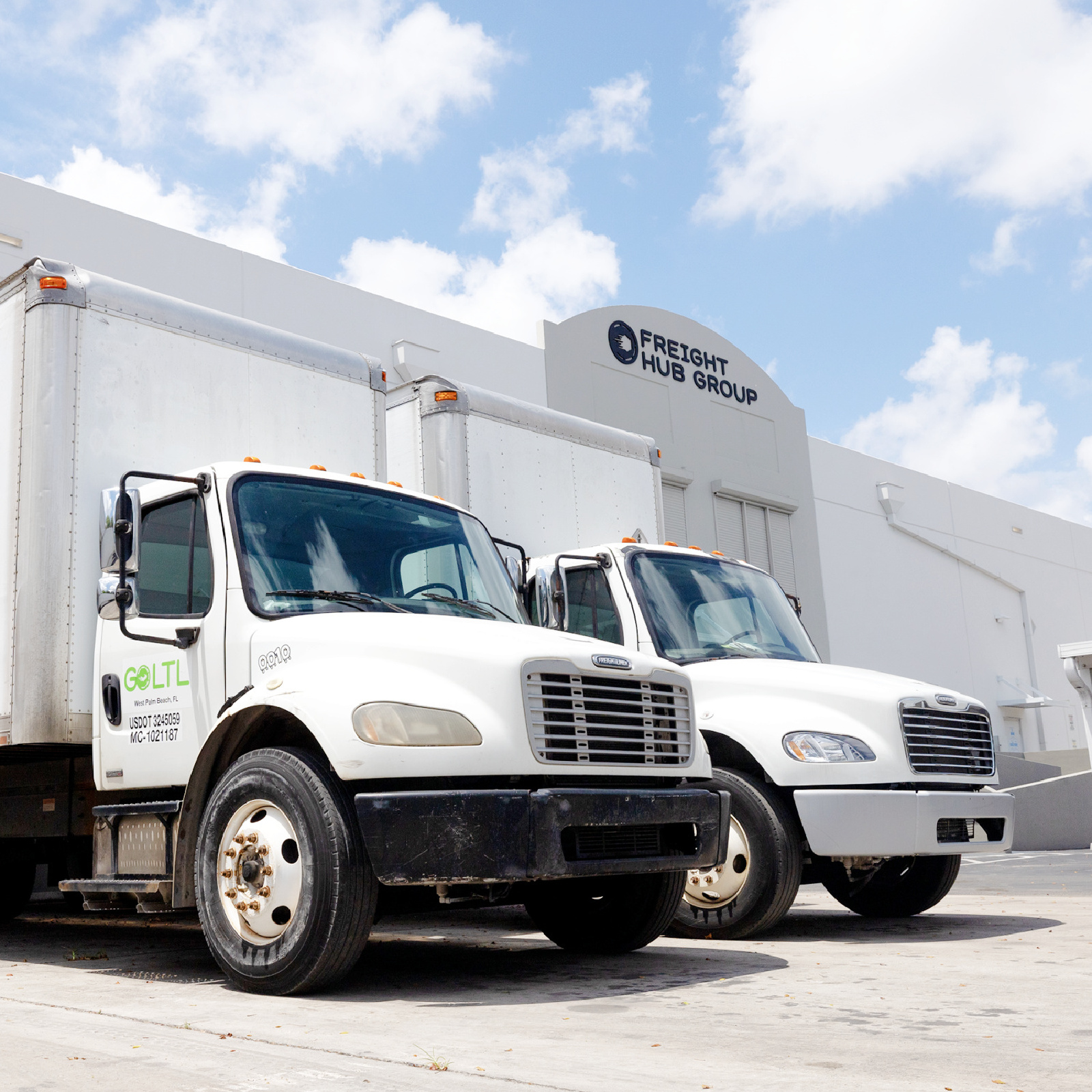
Go LTL is a U.S. Customs approved bonded common carrier and holds a liquor license, which means beverage alcohol and in-bond cargo can stay within a single compliant chain of custody instead of being handed between parties. You can read more about how we handle regulated freight on our about page.
Imported product: the bonded path
A large share of South Florida’s beverage volume arrives by ocean at PortMiami or Port Everglades. The typical path looks like this:
- Arrival and customs release. The container arrives and is either cleared or held in bond pending duty and excise payment.
- Bonded transport. If the product has not been entered for consumption, it moves under bond — the carrier must be authorized to carry in-bond freight and must follow the movement rules that go with it.
- Deconsolidation. Containers are broken down at a container freight station into pallets or cases for regional distribution.
- Bonded storage, if needed. Product can be held in a bonded warehouse until duties are paid, which defers cost until the goods actually sell.
- Domestic delivery. Once entered, product moves as ordinary domestic freight to distributors or licensed retailers.
Using a bonded carrier for steps two through four is not a nice-to-have. If the cargo is in bond, the transportation has to be too. Our guide to what a bonded carrier is covers the mechanics in more detail.
Packaging and handling that actually holds up
Beverage freight fails in predictable ways. The fixes are equally predictable.
Palletize tight and low. Case goods should be stacked in interlocking columns, squared to the pallet edge with no overhang. Overhanging cases are the single most common cause of crushed corners in LTL.
Use slip sheets between layers. They stop layers from shearing when the truck brakes.
Stretch wrap to the pallet, not just around it. Anchor the wrap to the pallet deck so the load and the pallet move as one unit.
Cap the stack. A top sheet or cap protects against anything shifting above it in a multi-stop trailer.
Mark it. Fragile and this-side-up markings on all four sides, not one.
For a step-by-step walkthrough, see our guide on how to palletize freight for LTL shipping.
Temperature: when it matters and when it does not
Most spirits are tolerant of Florida heat. Wine and beer are not.
- Wine degrades above roughly 75–80°F and suffers badly from repeated heat cycling. Fine wine shipments in summer generally justify refrigerated transport.
- Beer, especially unpasteurized and craft product, loses quality fast in heat and light.
- Spirits are largely stable, though extreme heat can compromise closures and labels.
In a South Florida summer, a trailer sitting on a yard can exceed ambient temperature substantially. If the product is heat-sensitive, refrigerated LTL is the right call — our refrigerated LTL cold chain guide covers how that service works locally.
Event and hospitality delivery
Beverage freight for events adds another layer: a specific delivery window, a venue with its own loading rules, and often a licensed party who must be present to receive. Miami’s event calendar — art fairs, boat shows, conventions, hotel activations — generates a lot of this work.
Practical rules that prevent problems:
- Confirm who at the venue is licensed and authorized to sign for alcohol.
- Get the venue’s dock or freight elevator restrictions in writing.
- Schedule against the venue’s move-in schedule, not your own convenience.
- Plan for secure storage if delivery must precede the event.
Our event logistics team handles this pattern regularly across South Florida venues.
A pre-shipment checklist
- Confirm the licensing status of both shipper and consignee.
- Confirm whether the product is in bond or duty-paid.
- Verify the carrier holds the authority the shipment requires.
- Decide on ambient vs. refrigerated based on product type and season.
- Palletize and wrap to survive multi-stop handling.
- Document piece and case counts precisely — beverage shortages are heavily scrutinized.
- Confirm the receiver can legally accept and sign for the delivery.
Frequently asked questions
Can any trucking company haul alcohol in Florida?
No. Beverage alcohol is a regulated commodity, and a carrier moving it between tiers of Florida’s three-tier system needs the appropriate authority to do so. If the product is imported and has not yet been entered for consumption, the carrier also needs to be authorized to move in-bond cargo. Always confirm a carrier’s licensing before tendering beverage freight rather than assuming general freight authority is enough.
What does it mean for alcohol to be shipped in bond?
In-bond means the imported product has arrived in the United States but the applicable duties and excise taxes have not yet been paid. While in that status, the cargo has to remain within a customs-supervised chain — moved by a carrier authorized to handle bonded freight and stored in a bonded facility. Using a bonded carrier and bonded warehouse lets an importer defer the tax cost until the product is actually released for sale.
Does wine need refrigerated transport in Florida?
Frequently, yes. Wine begins to degrade at sustained temperatures above roughly 75 to 80 degrees Fahrenheit, and a trailer in a South Florida summer can exceed that comfortably. For everyday commercial wine over a short local lane the risk may be acceptable, but for fine wine, longer transit, or peak summer months, refrigerated transport is the safer choice.
Moving beverage freight in South Florida? Request a quote and tell us whether the product is bonded, duty-paid, or temperature-sensitive.


Recent Comments