


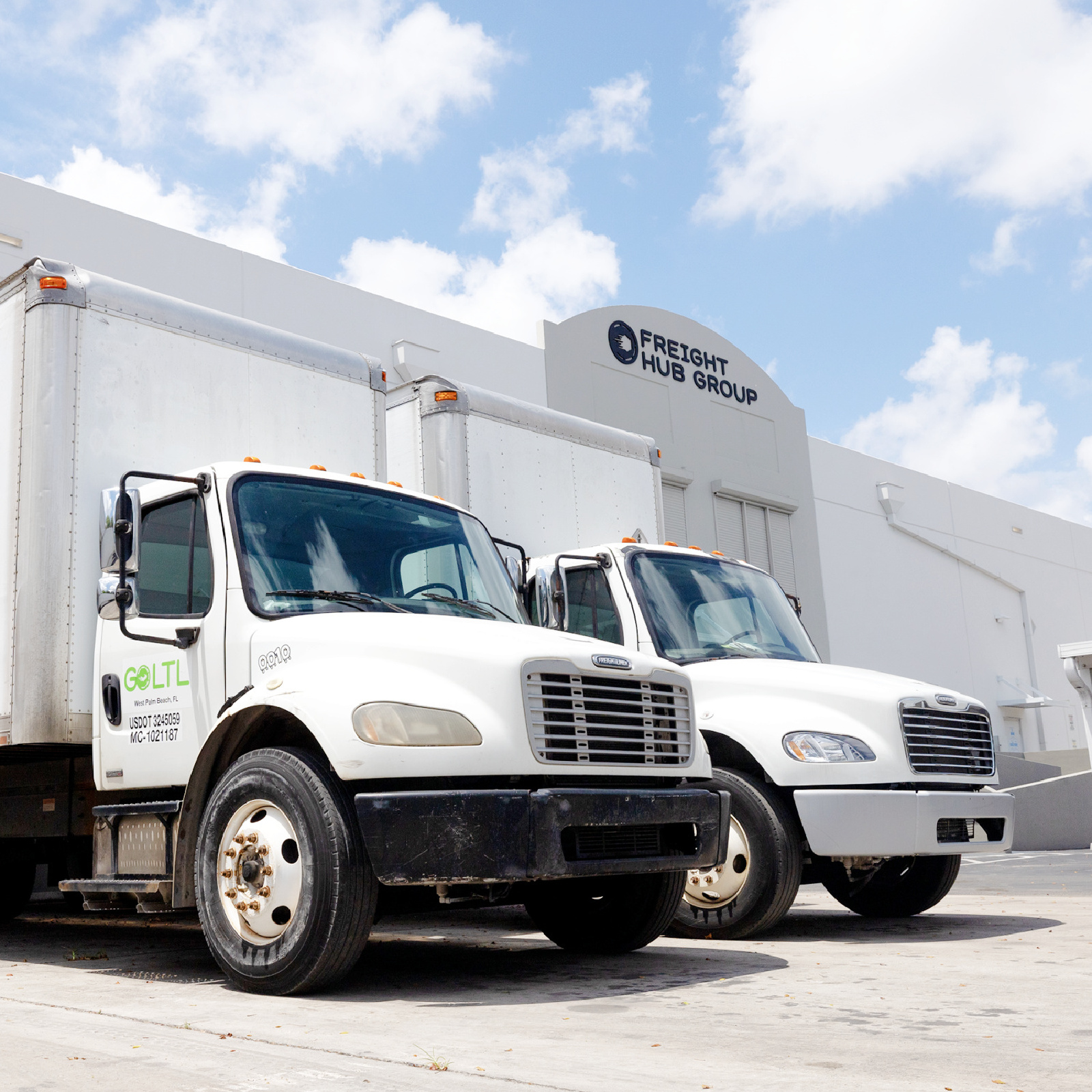
Choosing the wrong truck is an easy way to pay too much or hit a wall at the delivery dock. A 53-foot trailer cannot get down some streets in Miami Beach, while a small box truck may be a poor fit for twenty pallets headed to a distribution center. Here is a simple way to match the vehicle to the freight.
The three common options
16-foot box truck. The smallest of the three. It handles a handful of pallets or a large number of cartons, and it is agile in dense neighborhoods, shopping districts and buildings with tight loading areas.
26-foot box truck. This is the workhorse for local and regional freight. It typically holds around ten to twelve standard pallet positions, depending on how the freight is loaded, and many models come with a liftgate for delivery without a dock. For a deeper dive into this vehicle, see what to know about 26-foot box trucks.
Dry van. An enclosed trailer, commonly 53 feet, used for larger loads. A full trailer can hold up to about twenty-six pallet positions and a high volume of boxed freight, and it is loaded and unloaded at a dock door.
Capacity varies by truck and by how the freight is built, so treat these as planning ranges, not guarantees.
How to choose
1. Freight volume and weight
Count your pallets, measure the height and note the total weight. A few pallets might fit on a 16-foot truck. A larger shipment usually points to a 26-foot truck or a dry van. If volume is somewhere between a partial and a full load, LTL consolidation can be more cost-effective than booking a whole vehicle. Read more about when LTL is the right call.
2. Where you are delivering
Access often decides the truck. Ask:
- Is there a loading dock, or is it ground level?
- Is there a height restriction at a garage or condo?
- Are there turning, parking or time-of-day limits?
- Is a liftgate needed?
Locations with limited access are common in South Florida, from high-rise buildings to event venues. Our guide to limited access delivery fees and the post on liftgate delivery in South Florida explain what to expect.
3. Number of stops
Several stops in one day favor a nimble box truck that can maneuver through traffic and park near entrances. A single drop at a warehouse is where a dry van shines. For multi-stop routes, see multi-stop truckload options in South Florida.
4. Speed and flexibility
Smaller trucks are easier to dispatch same-day. A dry van is often scheduled further ahead and tied to dock appointments. If your priority is urgency, ask about same-day availability and cutoff times.
5. Cost
In general, the larger the vehicle, the higher the cost to dispatch it. But the cost per pallet can fall as the truck fills up. Compare the total cost of the job, including accessorial charges, not just the vehicle rate.
Quick comparison
| Factor | 16 ft box truck | 26 ft box truck | Dry van |
|---|---|---|---|
| Typical use | Small loads, tight access | Local and regional pallets | Large, dock-to-dock loads |
| Pallet capacity (approx.) | Roughly six | Roughly ten to twelve | Up to about 26 |
| Liftgate availability | Often | Often | Rarely; dock-based |
| Best for | Urban stops | Mixed local freight | Bulk freight |
Matching trucks to real South Florida jobs
- Retail deliveries to several stores: a 26-foot truck for the route, possibly after a cross-dock.
- A few pallets to a condo or boutique: a 16-foot truck with a liftgate and COI.
- Event load-in at a convention center: a box truck scheduled to the venue’s window; see the Miami Beach Convention Center shipping guide.
- A full inbound load to a warehouse in Doral: a dry van to a dock door.
Go LTL’s fleet includes 26-foot and 16-foot box trucks and dry vans, so you do not need to commit to one in advance. Get a quote with your pallet count, weight and delivery address, and we will recommend the right fit.
Frequently asked questions
Which is cheaper, a box truck or a dry van?
A box truck usually costs less to dispatch for small and medium loads. A dry van can be more economical per pallet when you have enough freight to fill most of the trailer.
Can a box truck deliver without a loading dock?
Often yes, especially when it has a liftgate. You should confirm the equipment in advance, because ground-level deliveries without a liftgate can require extra labor or equipment.
How many pallets fit in a 26-foot box truck?
Typically around ten to twelve standard pallet positions, depending on pallet size, height and whether freight can be stacked. Confirm with your carrier before booking.