
If you have ever wondered how a pallet picked up in Doral can end up on a truck headed to Fort Lauderdale the same afternoon, cross-docking is usually the answer. It is one of the quiet workhorses of less-than-truckload (LTL) shipping, and understanding it helps you plan pickups, avoid delays and avoid paying for storage you do not need.
What is cross-docking?
Cross-docking is the practice of unloading freight from an inbound vehicle and moving it directly to an outbound vehicle with little or no storage in between. Instead of putting pallets into racking and picking them later, the freight crosses the dock floor, gets sorted by destination, and is reloaded. The whole process can take hours rather than days.
In an LTL network, cross-docking is what makes shared trucks possible. Several shippers’ freight rides together, and the cross-dock is where partial loads are combined into efficient multi-stop routes. That is the same idea described in our guide to LTL freight and when less-than-truckload is the right call.
How a cross-dock works step by step
- Inbound arrival. A truck arrives at the dock door with freight from one or more pickups. Paperwork, such as the bill of lading, is checked against what is on the truck.
- Unload and verify. Pallets are counted, inspected for visible damage, and scanned or logged.
- Sort by destination. Freight is staged in lanes on the dock floor according to where it is going next, such as a zone, route or customer.
- Reload. Pallets are loaded onto the outbound truck in delivery order, so the last stop is loaded first and the first stop is loaded last.
- Depart. The outbound truck leaves on its route, and tracking updates reflect the new status.
Because freight is handled at least twice, clear labeling and accurate documents matter a great deal. A pallet with a missing label can lose hours at a cross-dock.
Cross-docking vs. warehousing
Warehousing is built around storing goods; cross-docking is built around moving them. A warehouse is the right choice when inventory has to wait for orders. A cross-dock is the right choice when the freight already has a destination and you simply need it consolidated, split or transferred.
Many shippers use both. For example, an importer might store most of a shipment in a warehouse but cross-dock a few urgent pallets straight to a customer. If you are weighing storage options, our comparison of yard storage vs. warehouse storage covers what each is good for.
When cross-docking makes sense
Cross-docking tends to work well when:
- Freight is time-sensitive and should not sit in storage.
- You are consolidating several small shipments into one outbound load.
- You are splitting one large inbound load into many local deliveries.
- You are transferring freight between truck types, such as a larger vehicle to smaller box trucks for tighter urban streets.
It is less useful when freight needs long-term storage, special handling that the dock cannot provide, or when the shipment is already a full truckload going to a single consignee.
Benefits for South Florida shippers
South Florida has a dense mix of ports, an international airport, warehouse districts and residential or retail delivery points. Cross-docking helps in three practical ways:
- Fewer miles per pallet. Consolidated loads put more freight on each route, which tends to lower the cost per shipment.
- Faster turns. Freight that arrives in the morning can often leave the same day, depending on cutoffs and route capacity.
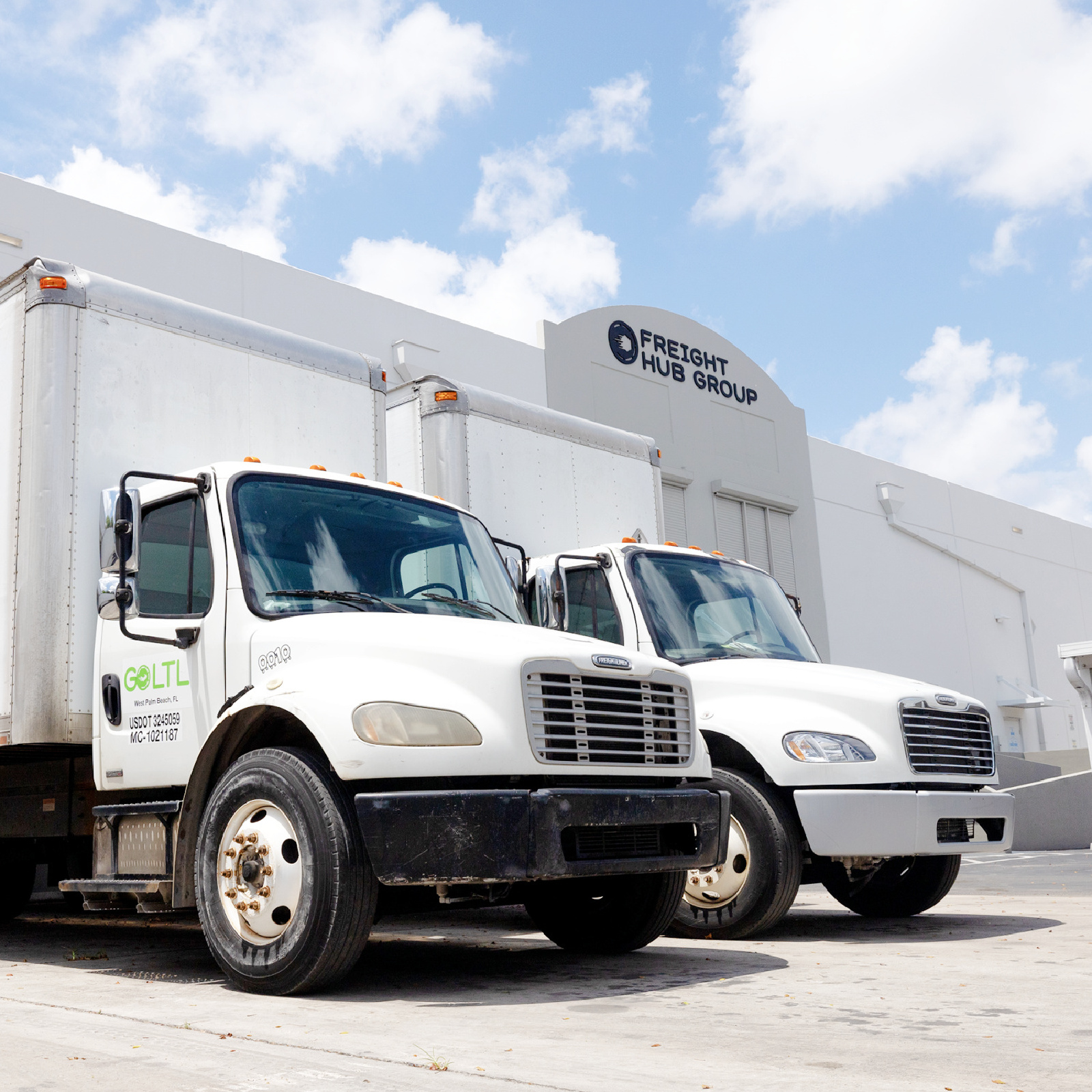
- Flexible last-mile handoff. A long-haul or port pickup can be transferred to smaller trucks for the final delivery. Go LTL operates 26-foot and 16-foot box trucks and dry vans for this kind of handoff.
How to prepare freight so it crosses the dock smoothly
- Label every pallet or piece on at least two sides with the consignee name, address and your reference number.
- Make sure the bill of lading matches the actual piece count, weight and pallet dimensions.
- Shrink-wrap and band pallets so they survive two touches by a forklift.
- Flag fragile, temperature-sensitive or hazmat freight in advance; not every freight can be mixed on a dock.
- Provide a delivery contact and hours so the outbound driver is not left guessing.
If you need a refresher on documents, see how to fill out a bill of lading correctly.
Frequently asked questions
How long does freight stay at a cross-dock?
Usually hours rather than days. The exact time depends on cutoffs, outbound route timing and how much sorting is required. Freight that misses a cutoff typically leaves on the next available route.
Is cross-docking the same as transloading?
They are related but not identical. Cross-docking moves freight between vehicles with minimal storage, often on similar equipment. Transloading usually refers to moving cargo from one mode to another, such as ocean container to truck, and may involve repacking.
Does cross-docking increase the risk of damage?
Any extra touch adds some risk, which is why proper palletizing, wrapping and labeling are important. Carriers that inspect freight at the dock and document its condition make it easier to resolve problems if they occur.
Ready to see how consolidation could fit your shipments? Request a quote and tell us your pickup, destination and freight details.

Recent Comments