
The most misunderstood number in LTL is the transit time. A carrier tells you two days, you plan around two days, and when it arrives on day four you discover that the two days was never a commitment. It was a service standard — an estimate of typical performance.
That distinction is the entire reason guaranteed service exists, and knowing when to buy it is a straightforward cost calculation once you see it clearly.
What a standard transit time is
Standard LTL transit is a published service standard: the number of business days a carrier expects a lane to take under normal conditions. It excludes weekends and holidays, and the clock generally starts the business day after pickup rather than the moment the driver leaves your dock.
Crucially, it carries no financial commitment. If the shipment runs late for any reason — terminal congestion, an equipment failure, weather, a linehaul that did not fill — the carrier owes you nothing beyond moving the freight.
That is not carriers being evasive. LTL is a consolidation network. Your pallet rides with dozens of other shipments through one or more terminals, and every consolidation point is a place where a day can be lost.
What guaranteed service actually guarantees
Guaranteed LTL converts the estimate into a contractual commitment, usually in one of three forms:
- Guaranteed by end of day on the standard transit date — the most common and cheapest tier.
- Guaranteed by a specific time, typically noon or an early morning window — priced higher.
- Expedited or dedicated, where the freight leaves the consolidation network entirely and moves direct on its own truck.
The remedy for a missed guarantee is almost always a refund or waiver of the guarantee charge, and sometimes the freight charges. It is not compensation for your downstream losses. If a late delivery costs you a $20,000 event build, the guarantee refunds the premium, not the event.
The exclusions that matter
Guarantees are voided by things outside the carrier’s control and by things you did. Common exclusions include weather and natural disasters, incorrect or incomplete addresses, receiver unavailability, refused deliveries, misdeclared freight, and hazmat or oversized commodities. In Florida, the weather exclusion is not theoretical — guarantees routinely suspend during named storms, which is exactly when you most want them.
When guaranteed service pays for itself
Run this comparison: what does the guarantee cost, versus what does one day late cost you?
- Event and trade show freight. Show floors have hard move-in windows. Late freight is not late — it is absent. This is the clearest case for guaranteed or dedicated service, and it is why event logistics is priced differently from routine freight.
- Retail vendor compliance. Chargebacks for missed delivery windows frequently exceed the guarantee premium several times over.
- Production line inputs. A downline stoppage costs more per hour than any freight premium.
- Installation and service appointments. A crew standing idle is a real cost, plus a rescheduled customer.
- Perishables and pharmaceuticals. Time is product integrity, not just convenience.
Conversely, guaranteed service is usually wasted on replenishment stock, spare parts going into inventory, samples, and anything with slack in the schedule. Paying for certainty you do not need is one of the more common freight budget leaks.
Cheaper ways to buy speed
Before paying a guarantee premium, check whether the delay is structurally avoidable:
- Ship earlier in the week. A Thursday pickup on a three-day lane lands Tuesday. A Monday pickup lands Thursday. Same rate, four days of difference in exposure.
- Fix the receiving end. A meaningful share of “late” deliveries are freight that arrived on time and could not be delivered. Correct contacts and known receiving hours solve this for free.
- Reduce handling. For regional moves, a direct local carrier avoids terminal consolidation entirely — often arriving faster than a guaranteed service on a hub network, at a lower price.
- Consider a dedicated run for consolidated volume. If you have several shipments going the same direction, one dedicated truck can beat multiple guaranteed LTL shipments.
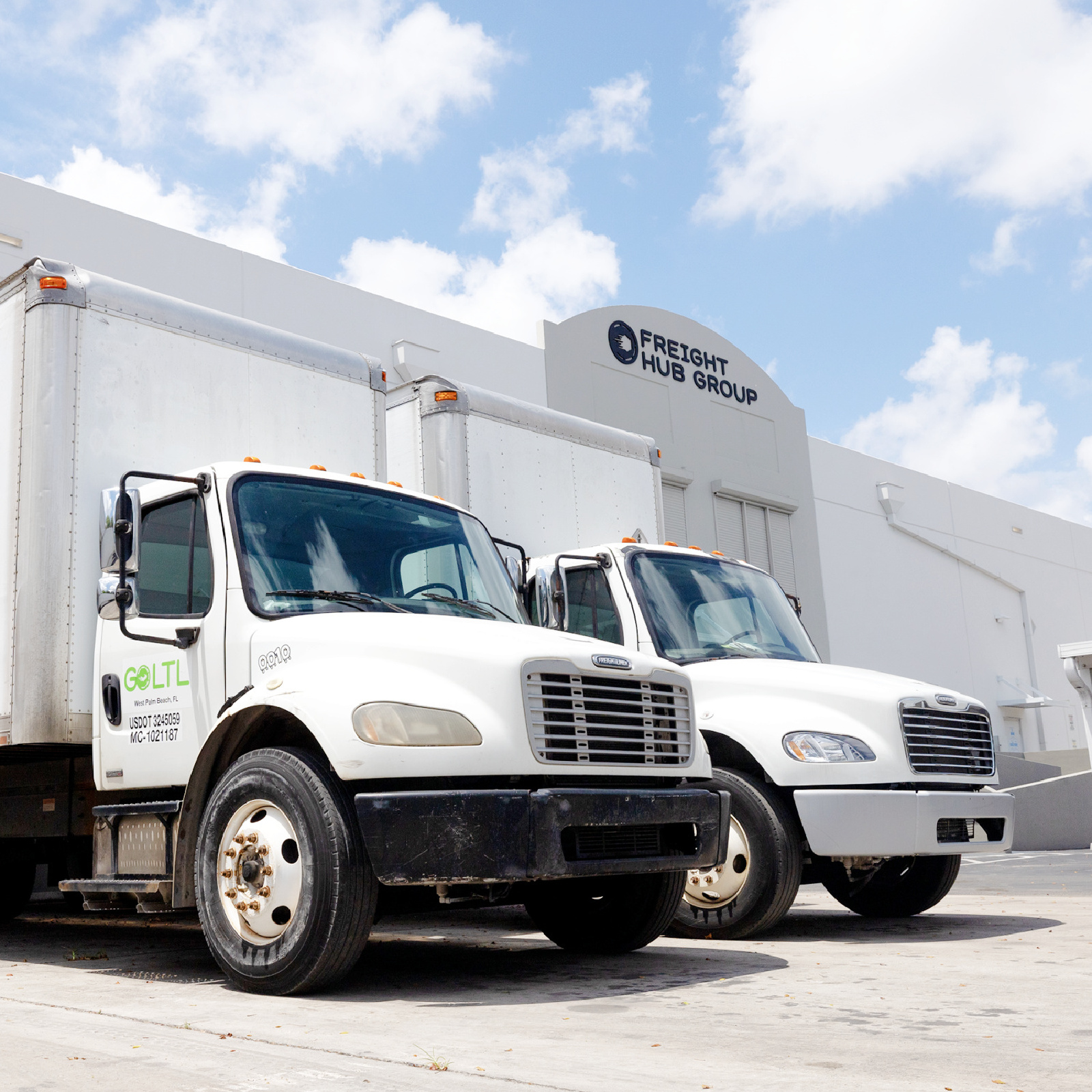
That third point is why local matters. Within Miami-Dade, Broward, and Palm Beach, Go LTL moves freight direct on our own trucks rather than through a hub-and-spoke network, with live tracking through our platform so you can see the ETA rather than hope for it. See our LTL services, track an existing shipment on our shipment tracker, or get a quote at (786) 445-0150.
Frequently asked questions
What happens if a guaranteed LTL shipment is late?
In most tariffs the guarantee charge is refunded or waived, and in some cases the freight charges as well. Guarantees do not cover consequential damages such as lost sales or event costs, so if the downstream exposure is large, a dedicated truck buys more actual certainty than a guarantee does.
Does guaranteed service make the shipment move faster?
Not usually. Standard guaranteed service commits to the existing transit standard rather than shortening it — you are buying accountability, not speed. Expedited or dedicated service is what actually shortens transit, because the freight bypasses the consolidation network.
Are guarantees valid during hurricane season?
Guarantees are typically suspended for weather and other force majeure events, and Florida carriers commonly suspend them during named storms and their aftermath. If your shipment is weather-sensitive, moving it earlier is more reliable than paying for a guarantee that may not apply.


Recent Comments