
Store replenishment looks simple on a spreadsheet and gets complicated the moment a truck pulls up to a mall service entrance at 11 a.m. on a Saturday. Retail distribution in South Florida has to work around mall access rules, narrow receiving windows, seasonal traffic, and stores that range from a big-box dock in Pembroke Pines to a 900-square-foot boutique in Coconut Grove with no back door.
This guide covers how to design a store distribution program in the tri-county area that actually holds its schedule.
Start with the receiving constraint, not the route
The most common planning mistake is building the route around driving distance and then discovering the stores cannot receive when the truck arrives. Receiving windows are the binding constraint. Build around them.
Collect, per store: the receiving hours, the day of week the store prefers, who signs, the dock or door to use, whether a hand truck is needed, and whether the shopping center imposes its own delivery restrictions. Many South Florida malls and lifestyle centers prohibit deliveries during peak shopping hours and route all freight through a specific service corridor.
The tri-county reality
- Miami-Dade gives you density but also the worst access. Miami Beach, Brickell, the Design District, and Coconut Grove combine narrow streets, loading zone limits, and metered curb space. Early morning is often the only workable window.
- Broward is easier to route. Larger centers, more parking, more docks, and a grid that forgives a late start.
- Palm Beach County adds distance. Stores from Boca Raton up to Palm Beach Gardens stretch a route considerably, and seasonal population swings change both traffic and store demand.
Because of this, a single route covering all three counties rarely works. Two or three route days, each anchored in one county, almost always outperforms one long run.
Choosing a delivery model
Direct-to-store from a distribution center
Works when your DC is in South Florida and volume per store is meaningful. One handling, full control, easy returns.
Cross-dock and distribute
Works when inventory arrives from out of state or from the port. Freight comes in on truckload or volume LTL, is broken down by store, and goes out on local routes the next morning. This is usually the lowest total cost for regional retailers without a Florida DC, and it converts a long list of LTL accessorials into one inbound move plus local stops. Our container freight station and yard storage facilities support this pattern.
Store-to-store transfers
Often overlooked and often valuable. Moving slow-selling inventory from one location to another where it sells is cheaper than markdowns, and it fits neatly into an existing route as an extra stop.
Route design that survives contact with reality
- Cluster by county, then by corridor. A route that jumps from Kendall to Fort Lauderdale and back is a route that will fail.
- Load in reverse stop order. Last store loads first. This is the single highest-return discipline in multi-stop delivery.
- Deliver before the store opens where you can. Early access arrangements remove the peak-hours problem entirely for stores that allow it.
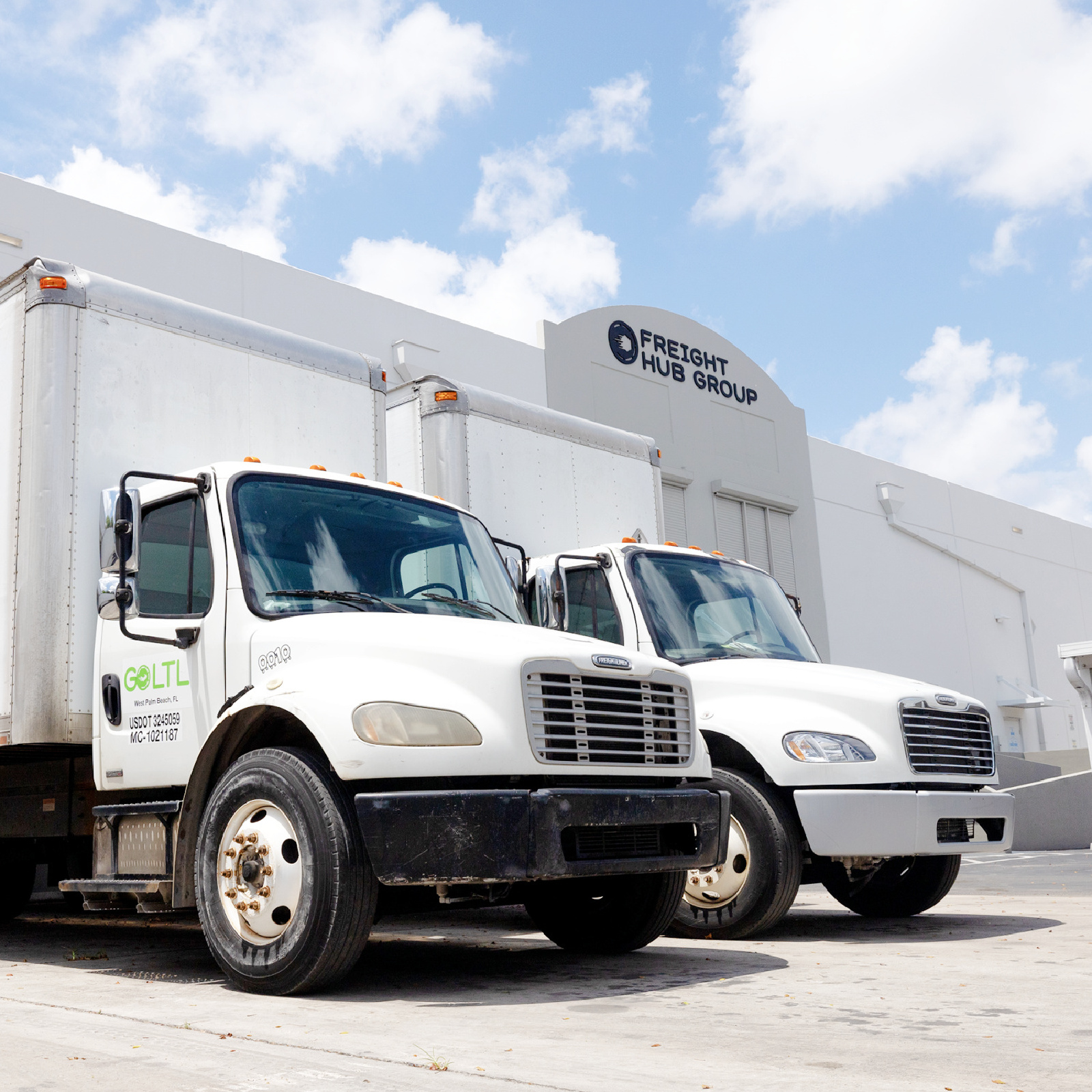
- Right-size the vehicle. A 26-foot box truck with a liftgate is the workhorse; a 16-foot van is better for Miami Beach and the Grove. A 53-foot trailer is not a store delivery vehicle in most of this market.
- Build the return leg in. Empty hangers, fixtures, damaged goods, and customer returns should ride back on the same truck. Handling reverse logistics as a separate service doubles your cost.
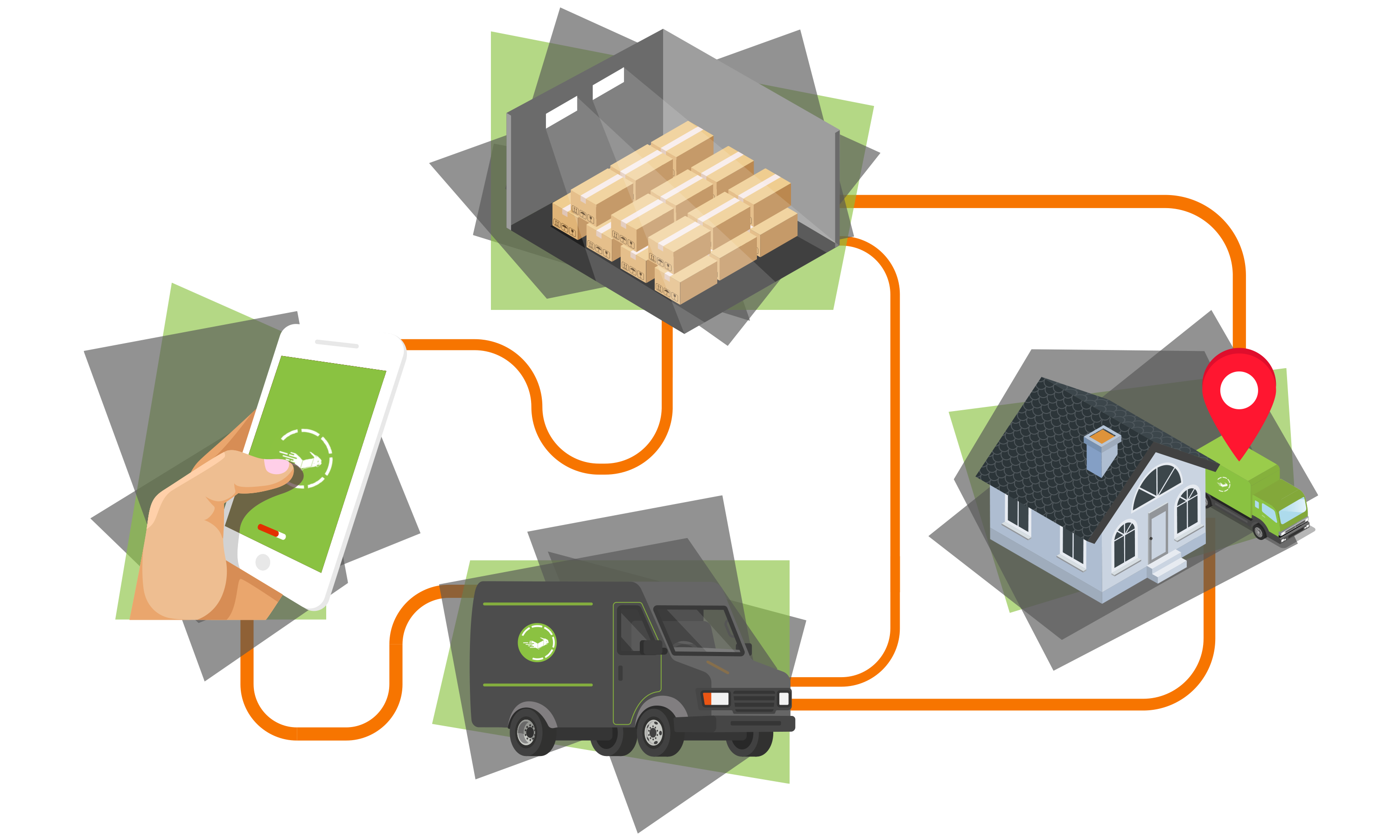
- Give store managers visibility. A manager who knows the truck arrives at 7:40 staffs for it. Live tracking through our shipment tracker replaces the morning phone calls.
Compliance and paperwork
Even for a small chain, the paperwork discipline matters. Every stop should produce a signed delivery receipt with piece count and any exceptions noted at the door — not later. Photo proof of delivery at the receiving door protects both sides when a discrepancy surfaces a week later.
If you deliver to third-party retailers rather than your own stores, their routing guide governs. Appointment requirements, labeling standards, pallet configuration, and advance ship notices all carry chargeback exposure. Read the guide before the first shipment, not after the first deduction.
Seasonality in South Florida
Three patterns to plan for:
- Winter season, roughly November through April. Population and retail demand rise, traffic worsens, and delivery windows tighten. Add time to every route.
- Hurricane season, June through November. Have a plan for pulling deliveries forward ahead of a watch and for restocking quickly afterward.
- Event weeks. Art Basel, boat shows, and major convention weeks close streets and saturate local capacity, particularly in Miami Beach and Wynwood. If you have stores in those areas, plan around the calendar. Our event logistics team tracks these dates closely.
What to measure
Four numbers tell you whether the program is working: on-time delivery percentage against the store’s window, stops completed per route hour, cost per store delivery including all accessorials, and the rate of exceptions or short shipments at receiving. Track them weekly. When cost per delivery drifts up, it is almost always because route density fell or dwell time grew — both fixable.
If you are running store deliveries across South Florida and the routes are not holding, send us your store list with receiving windows and we will map what a workable route structure looks like.
Frequently asked questions
How often should stores be replenished?
It depends on sales velocity and backroom space. High-turn locations with limited storage often need three to five deliveries a week, while slower stores with room to hold stock can run once or twice weekly. Small-format stores in Miami Beach and the Design District usually need more frequent, smaller drops simply because they have nowhere to put inventory.
Can returns be picked up on the same delivery run?
Yes, and they generally should be. Loading returns, fixtures, and empty packaging onto the outbound truck at each stop uses capacity that is already paid for and avoids a separate reverse logistics charge. It does require planning space on the vehicle for the return volume.
What is the best vehicle for mall and shopping center deliveries?
A 26-foot box truck with a liftgate covers most South Florida shopping centers, while a 16-foot box truck or cargo van is easier in Miami Beach, Coconut Grove, and the Design District where streets and service corridors are tight. Check each center’s own vehicle size restrictions before assigning equipment.

Recent Comments